Brampton Janitorial Experts
Your business requires regular cleaning scheduled according to potential hazards, food processing capacity, allergen concerns, and health inspections, plus documented records demonstrating HACCP compliance, regulatory audits, and government health requirements. The information below detail essential sanitation program components.
Important Highlights
- Food safety cleaning technicians in Brampton work with restaurants, grocery departments, commissaries, warehouses, bakeries, schools, mobile vendors, and allergen-sensitive operations.
- Cross-contamination avoidance is accomplished by treating frequently contacted areas, food-contact equipment, kitchens, floors, drains, restrooms, and storage areas with area-specific procedures.
- Approved sanitizer dilution, alignment, and contact time are verified by trained providers, with finalization documented via checks, assessments, and correction logs.
- Sanitation calendars should comply with danger, output capacity, switches, incidents, and guidelines, with daily, periodic, and periodic operations designated by location.
- Coverage, coded instruments, hazard analysis knowledge, public-health competency, safety training preparation, references, and assessment-ready hygiene paperwork are critical contractor characteristics.
Which Brampton Facilities Need Food Safety Cleaning?
Any Brampton facility that processes, stores, prepares, packages, or distributes food needs sanitation protocols. You must implement it if your business falls under public health review, food rules, or HACCP systems. That requirement covers restaurants, cafeterias, commissaries, grocery food departments, butcher shops, seafood counters, convenience stores, and institutional kitchens.
You'll furthermore need adherent sanitation standards in storage centers, processing facilities, refrigerated warehouses, bakery retailers, school nutrition programs, event halls, and delivery centers. Seasonal and mobile ventures are included, like food trucks, event sellers, and temporary stalls. When your team work with ingredients, section ready-to-serve foods, heat meals, or keep allergens stored, your establishment requires recorded sanitation procedures. In Brampton, hygiene is compulsory; it constitutes regulatory, business, and safety adherence.
What Services Do Brampton Cleaning Experts Provide?
Your operation needs cleaning professionals who disinfect frequently contacted surfaces, kitchens, all floor types, and toilet facilities to maintain food safety compliance and public health standards. These zones receive attention due to their elevated cross-contamination potential, trip and slip dangers, and breaches of sanitation codes.
When you understand what they clean, you can ensure your operation's cleaning procedures satisfy operational and regulatory requirements.
Disinfecting High-Touch Areas
organize sanitization schedules based on activity levels, infection risk, and how the space is used.
following sequential patterns, and dividing sanitization equipment according to zone
Cooking Zones, Walking Surfaces, and Restroom Environments
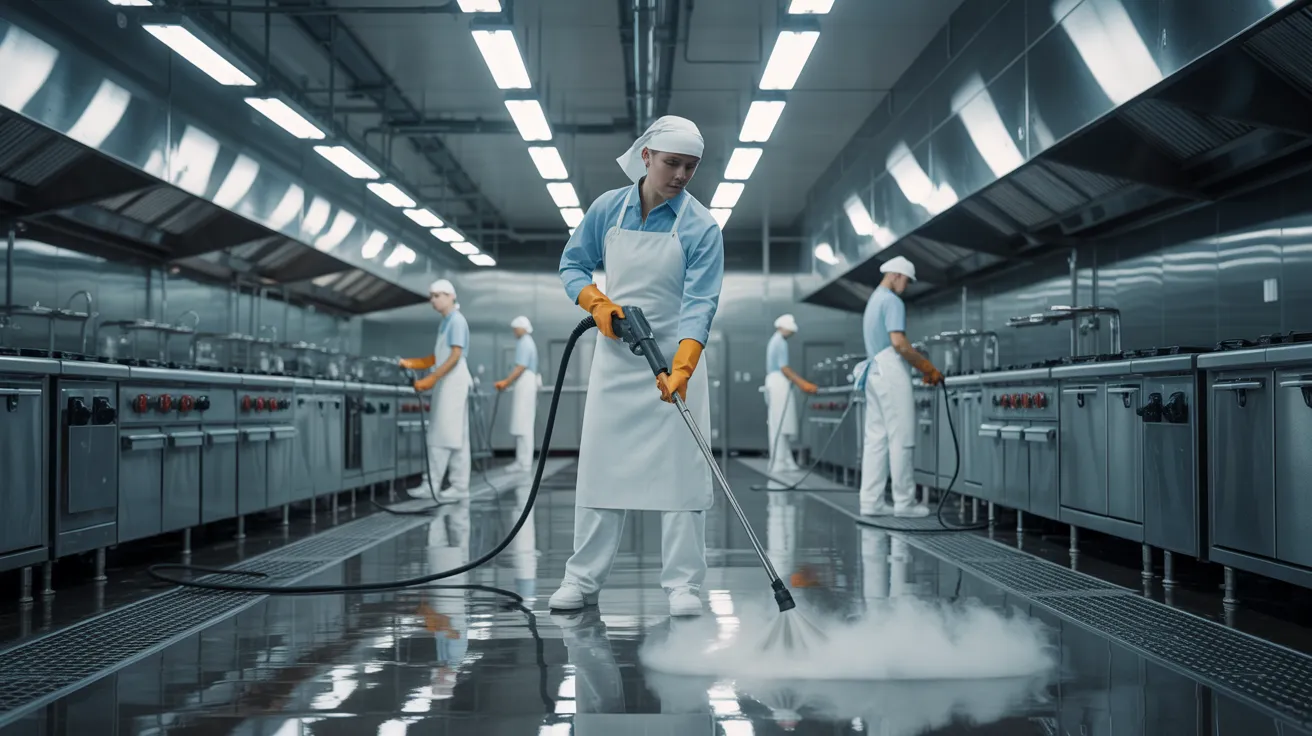
Expect Brampton cleaning experts to target kitchens, floors, and restrooms because each area carries distinct foodborne illness prevention, slip-and-fall, and sanitation risks. In industrial kitchens, you need grease removal from cooking stations, appliance surfaces, drain systems, preparation areas, and backsplashes to minimize bacterial growth and pest activity.
Documented floor maintenance is also provided as part of the service.
For restroom sanitation, cleaners sanitize high-touch surfaces, bathroom fixtures, stall dividers, supply dispensers, and trash receptacles, then replenish amenities and manage odor. They also service restaurant moprooms, where chemical storage, sink hygiene, and drainage conditions can affect sanitation compliance and staff safety daily.
Why Food Safety Cleaning Matters in Brampton
To adhere to health code requirements and succeed in audits, Brampton establishments must follow appropriate cleaning protocols. You also minimize cross-contamination by cleaning and sanitizing food-contact surfaces, equipment, and high-touch areas correctly. Most importantly, you safeguard community wellness by reducing the chance of food poisoning in your establishment.
Regulatory Code Requirements
Food operations in Brampton face strict public health standards, making food safety cleaning critical to fulfilling health code requirements, defending patrons, and sidestepping enforcement action. You must maintain sanitized food contact points, written maintenance records, correct sanitizer application, and verifiable staff procedures that correspond to municipal and provincial inspection expectations.
Quality sanitation practices supports in reducing allergen risks by limiting particles buildup on shared equipment and frequently touched surfaces.
Cross-Contamination Prevention
Maintaining regulatory compliance copyrights on your capacity to prevent cross-contamination during daily food handling and cleaning. You must separate raw ingredients from ready-to-eat foods, sanitize prep surfaces between tasks, and position cleaning agents away from food surfaces. Explicit protocols lower contamination threats and support consistent compliance during inspections.
You might establish allergen separation to stop main allergens from reaching common areas, containers, or machinery. Use dedicated cutting boards, color-coded tools, and rigorous tool identification so staff don't mix items during preparation or service. Mandate handwashing after handling uncooked meat, fish, egg products, or allergens. Change wiping cloths regularly, and check sanitizer strength with test strips. When you train staff to follow these controls each shift, you develop a more sanitary, secure business that matches Brampton's safety requirements every day.
Public Health Safeguarding
Should cleaning standards collapse, you don't simply encounter inspection problems—you expand the odds of contamination-related sickness harming customers, staff, and the wider Brampton community. You also weaken your role in safeguarding community wellness, especially in high-traffic food premises where contamination can spread quickly through surfaces, equipment, and touchpoints.
You need sanitation procedures that eliminate contaminants, sanitize correctly, and confirm effectiveness. That means following contact times, using approved disinfectants, documenting schedules, and educating employees to meet regulatory standards. These measures facilitate pathogen reduction by reducing pathogens before they contaminate surfaces or food. In Brampton, strong sanitation shields at-risk groups, prevents disease spread, and enables you to show due diligence. When you clean to standard, you exceed basic requirements—you substantially decrease danger and promote secure food handling throughout the region.
Why Is Cleaning Essential for Food Safety Compliance?
Establishing rigorous cleaning routines backs food safety compliance by reducing contamination risks, preventing pathogen multiplication, and keeping your facility aligned with sanitation requirements under HACCP-based programs and public health regulations. You confirm that food-contact surfaces appear visibly clean and microbiologically controlled, facilitating documented preventive controls and inspection readiness.
Conscientious cleaning additionally strengthens allergen management by removing residues that explore can trigger undeclared allergen exposure. When you combine verified sanitation methods with compliance training, your staff can adhere to standardized methods, use approved chemicals appropriately, complete records thoroughly, and address deviations ahead of escalation occurs. Regular cleaning facilitates traceability, validates corrective steps, and shows responsibility throughout audits. Furthermore, it aids you preserve product quality, copyright operational adherence, and reduce the possibility of regulatory actions, product recalls, formal complaints, and unnecessary public health risks.
What's the Best Time to Schedule Commercial Cleaning?
gather harmful substances. Boost frequency
plan cleaning right before and immediately [[after for optimal event turnaround.
How Do You Choose Brampton Cleaning Experts?
Evaluate providers first by food-safe sanitation requirements rather than price alone. You must ensure each provider understands CFIA, public health, and HACCP-aligned expectations for your business. Request insurance proof, WHMIS compliance, staff training documentation, and supervision methods. Check technician understanding of cross-contamination risks, chemical safety, and traceable sanitation records.
You must also evaluate operational reliability and oversight. Seek references from Brampton food companies, then assess response times, corrective processes, and communication standards. Ensure the company supports supplier audits and can provide inspection-compliant records when authorities or third parties demand verification. Verify equipment care, color-coded items are deployed correctly, and operational-specific risks are understood. A qualified provider protects compliance, product integrity, and your market standing.
What does a cleaning and sanitation plan consist of?
Put together a written program that establishes every sanitation duty, standard, and accountability ahead of production commencement. You should list cleaning intervals, permitted substances, dilution percentages, exposure times, instruments, and inspection methods for each zone, surface, and piece of equipment. Add pre-operational inspections, corrective actions, and employee training requirements.
Your framework should also include cross-contamination controls, waste handling, pest-prevention measures, and documented schedules for restrooms, drains, floors, and food-contact areas. Clarify how you'll distinguish raw from ready-to-eat operations, help with ingredient tracking, and maintain accurate allergen labeling through validated cleaning between product changes. You should define accountability, maintain signed records, and review results against regulatory standards, HACCP controls, and customer requirements. When gaps appear, adjust procedures immediately and re-educate staff.
Popular Inquired Questions
Will cleaning services manage nighttime hours at Brampton facilities?
Yes, you can arrange cleaning services to accommodate nighttime operations in Brampton facilities. You'll coordinate nighttime cleaning around operational windows, security protocols, and personnel needs. Providers generally create overnight logistics to minimize disruption, maintain standards, and record finished tasks. You should verify response times, supervision, access procedures, and waste management before starting service.
Will Brampton cleaning experts address emergency spills?
Yes, you can locate several Brampton sanitation experts offering spill containment services. They manage hazardous materials, evaluate risks, contain affected areas, and execute rapid cleanup to minimize risk and limit operational impact. You should confirm timeframes, certifications, protocols, and procedures. If your facility must meet standards, choose a service that documents incidents, follows procedures, and supports audits.
Can green disinfectants be deployed safely on food preparation areas?
Yes, green disinfectants can be suitable for food preparation areas if you pick items marked food-safe and complying with regulations. You should check contact times, concentration levels, and rinse procedures before implementation. Many plant-derived products minimize chemical hazards, but you require evidence of effectiveness against target microorganisms. To keep surfaces residue-free, you should adhere to exact manufacturer guidelines and confirm the cleaning agent meets food sanitation requirements.
Do sanitation programs enable seasonal shifts?
Certainly, sanitation programs respond to seasonal shifts effectively. Adapt frequencies, staffing, cleaning agents, and validation steps to match with production rhythms while upholding regulatory requirements. Limit production interruptions via planning disinfection alongside line changes, peak volumes, and equipment use patterns. Concurrently update standard operating procedures, employee training, and environmental monitoring to capture seasonal hazards, new allergens, or elevated soil levels. Periodic assessments keep your strategy effective.
Do commercial cleaning providers instruct staff members in sanitation best practices?
Yes, professional cleaning services typically educate your team on sanitation best practices. You receive employee instruction on proper chemical use, contact times, contamination control, equipment disassembly, and documentation. They generally follow instruction with HACCP, GMP, and CFIA or regional health department requirements. Many perform hygiene inspections to verify compliance, spot deficiencies, and strengthen remedial steps. This allows you to sustain uniform processes, succeed in audits, and reduce food safety risks daily.
Final Thoughts
Partnering with Brampton commercial cleaning and food safety experts means more than cleaning—it ensures your facility stays inspection-compliant and your standards remain compliant. From kitchen areas to production zones, each cleaned area and organized section reduces health hazards and prevents major expenses. By arranging service on appropriate schedules and implementing a thorough cleaning program, you shield your workforce, your customers, and your image. In a tightly controlled market, sanitary conditions can't be overlooked—they're critical to business success.